
Searching for a Warrant in Larimer County
No single Colorado portal lists every active warrant. The state posts no public warrant list either. In Larimer County, the dependable method is to figure out which court likely issued the warrant, then use the official tool for that court and confirm with the clerk by phone. Have the person's full legal name, date of birth, and any citation or case number ready. A lawyer can read the result before you appear or turn yourself in.
- Call the Larimer County Sheriff’s Office at 970-498-5100, option 5, for outstanding-warrant information held through the county channel.
- Check the Colorado Judicial public docket for a state District Court or County Court case, using a date and at least one search filter.
- Contact the Fort Collins, Loveland, Wellington, Berthoud, or Timnath municipal clerk when a city citation or ordinance case is involved.
- Request the actual court document from the Larimer clerk or use the LCSO records process for eligible sheriff-held records.
- Confirm present status with the issuing court. CCIC, NCIC, and Nlets are law-enforcement systems, not public search sites.
Larimer County Warrant Docket Limits
The Colorado Judicial public docket is a good tool for finding a hearing, a courthouse, or a case number. It can even label events like an appearance on an arrest warrant or a bond hearing. Treat it as a schedule, though, not a warrant ledger. The search needs a date plus one filter, such as a location, case, party, or attorney. A missing result can come from a narrow date range, a spelling slip, the wrong court selection, delayed entry, or an access restriction. That is why a careful Larimer County warrant lookup starts with broad case identification and ends with direct confirmation from the clerk or sheriff. View the state docket interface source.
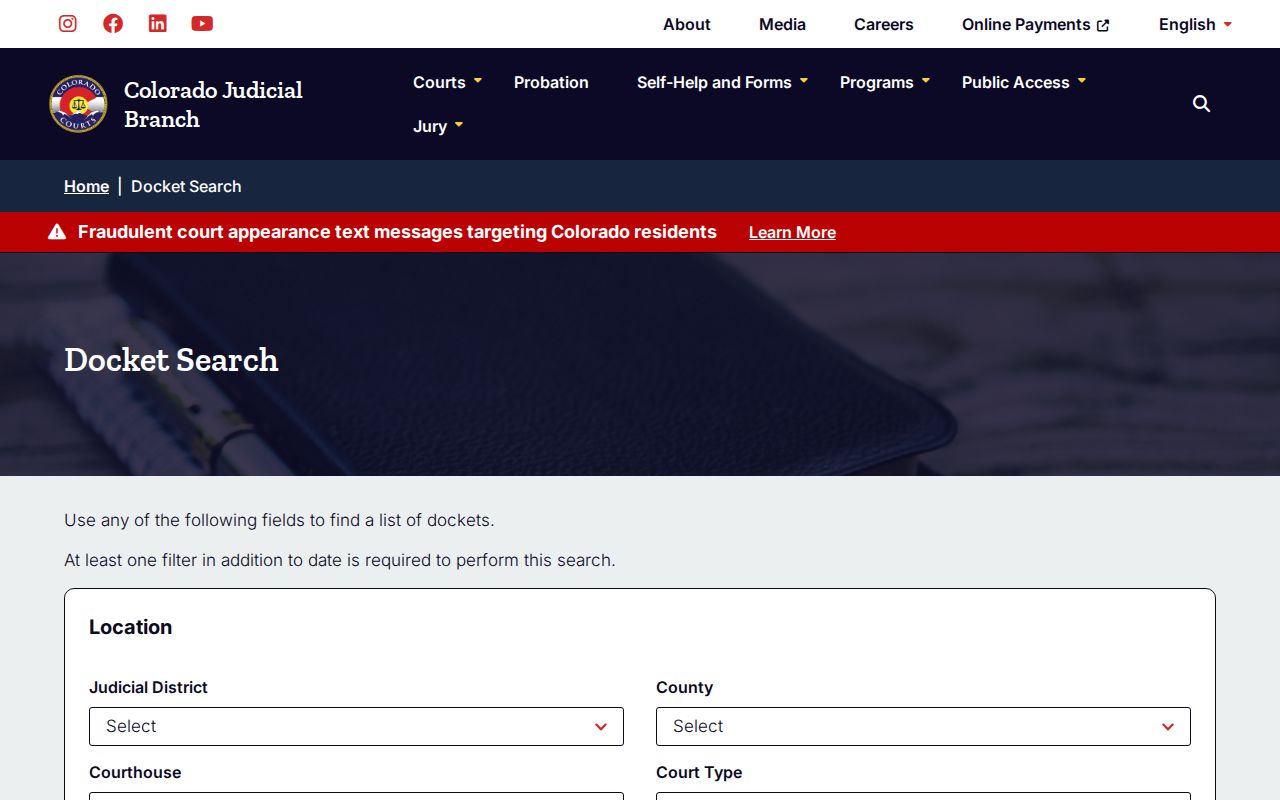
In Larimer County, the filters locate a scheduled matter; the clerk still answers for current warrant and document status.
Warrant Search Fields Explained
Larimer County's public search routes ask for different fields because they do different jobs. The docket finds scheduled proceedings. The court-document form locates case files. The LCSO Most Wanted page filters a curated list. None of them rolls county, municipal, state, and federal warrants into one result.
| Field Label | Type | Required | Notes |
|---|---|---|---|
| Date | Date or range | Yes, docket | At least one other docket filter is also required |
| First and Last Name | Text | Varies | Use legal spelling; the court request also accepts party details |
| Case Number | Year, class, sequence | No | Examples follow formats such as 2023AA123456 |
| County or Courthouse | Select | No | Choose Larimer and the likely state-court location |
| Party DOB | Date | No | Helps the records unit distinguish similar names |
Larimer County Warrant Document Requests
When the docket leaves you short on detail, turn to the Colorado court record and document request form. It asks for contact information, county, case type, filing year, party information, date of birth when known, and the exact document requested. Criminal options cover the complaint or information, disposition or sentence order, protection order, and ticket. There is an "other" category too, and the form works even if you do not know the county. This is the request route used for Larimer County District Court and County Court files.
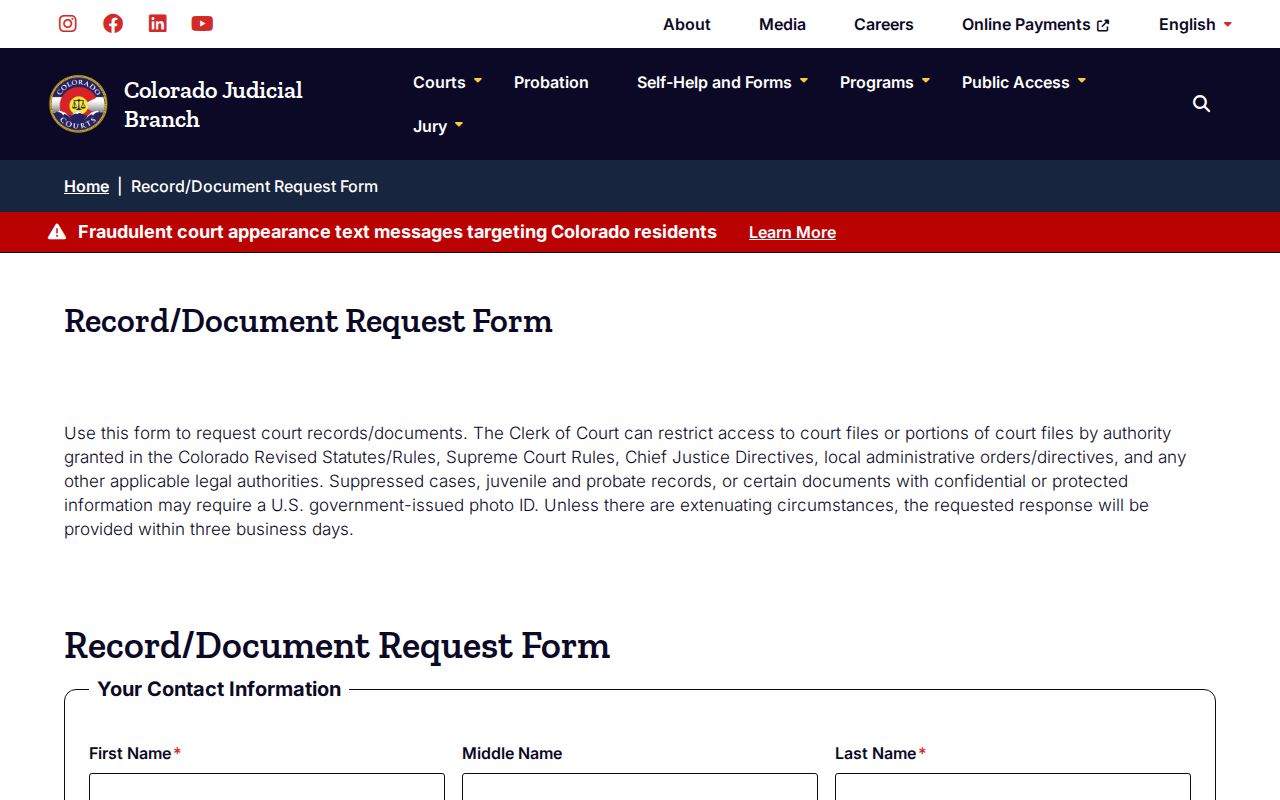
A document request can produce an eligible copy of a file. Filing one does not recall a warrant in Larimer County, and protected material may still be withheld.
What a Warrant Search Shows
A confirmed record in Larimer County may pull together court, sheriff, and custody fields. Check the issuing authority and status first. Bond figures and hearing labels can mislead without that context. LCSO notes that its Records Unit does not keep court dispositions, so the court clerk is the right source for an outcome.
| Warrant or docket number | A local reference such as Warrant/docket #; the public Most Wanted card does not guarantee this field |
|---|---|
| Reason or charge | The alleged offense, failure to appear, or other court process |
| Issuing authority | District, county, or municipal court and possibly a holding agency |
| Bond | Type, amount, PR, cash, surety, property, or no-bond notation when exposed |
| Status | Active, arrested, resolved, recalled, returned, satisfied, released, or unknown |
| Timing | Issue, arrest, release, hearing, return, or satisfied dates when available |
Why a Blank Larimer County Search Proves Little
A blank page is not a clearance letter. A warrant can be new, held by a municipal court, suppressed before arrest, sealed, tied to a juvenile case, or simply outside Larimer County. Keep each tool's limits in view. The Sheriff's Most Wanted page is curated, not complete. The docket is a schedule, not a live warrant database. Even the custody search only covers people booked into the jail.
Key point: Treat “no result” as a prompt to check the issuing clerk and LCSO option 5, not as proof that no warrant exists.
Sometimes one court shows a case and another source does not. Write down the case number. Then ask the named clerk whether the Larimer County warrant is active, recalled, quashed, satisfied, or awaiting a hearing.
Where to Check Warrants in Larimer County
For state matters, Larimer County District Court and County Court sit in the Colorado 8th Judicial District. The Justice Center clerk answers at 970-494-3500 or 08RecordRequest@judicial.state.co.us; Loveland County Court uses 970-622-2100 and 08RecordsRequest@judicial.state.co.us. The sheriff's warrant-information route is 970-498-5100, option 5. LCSO Records handles eligible reports, arrest summaries, jail material, and other law-enforcement records, but not the final court disposition. Municipal clerks keep city ordinance, traffic, and municipal bench-warrant files on their own shelves. Colorado offers no public statewide warrant button. CCIC, NCIC, and Nlets stay restricted to law enforcement, and CBI's public criminal-history request is not a live warrant confirmation service. So a Larimer County warrant check still runs through the courts, the clerks, and the sheriff.
Larimer County Custody Fields Are Different
The LCSO inmate search confirms custody and bond details after a booking. Type at least two letters of a last name to open a detail record. The fields can include arrest time, agency and case number, charges, authority, warrant or docket number, bond type and amount, resolved state, and upcoming court dates. That layout helps after an arrest. It cannot tell you whether someone not in custody has an outstanding warrant in Larimer County, so the issuing court or sheriff still gets that question. The interface itself shows the custody tabs and field structure.
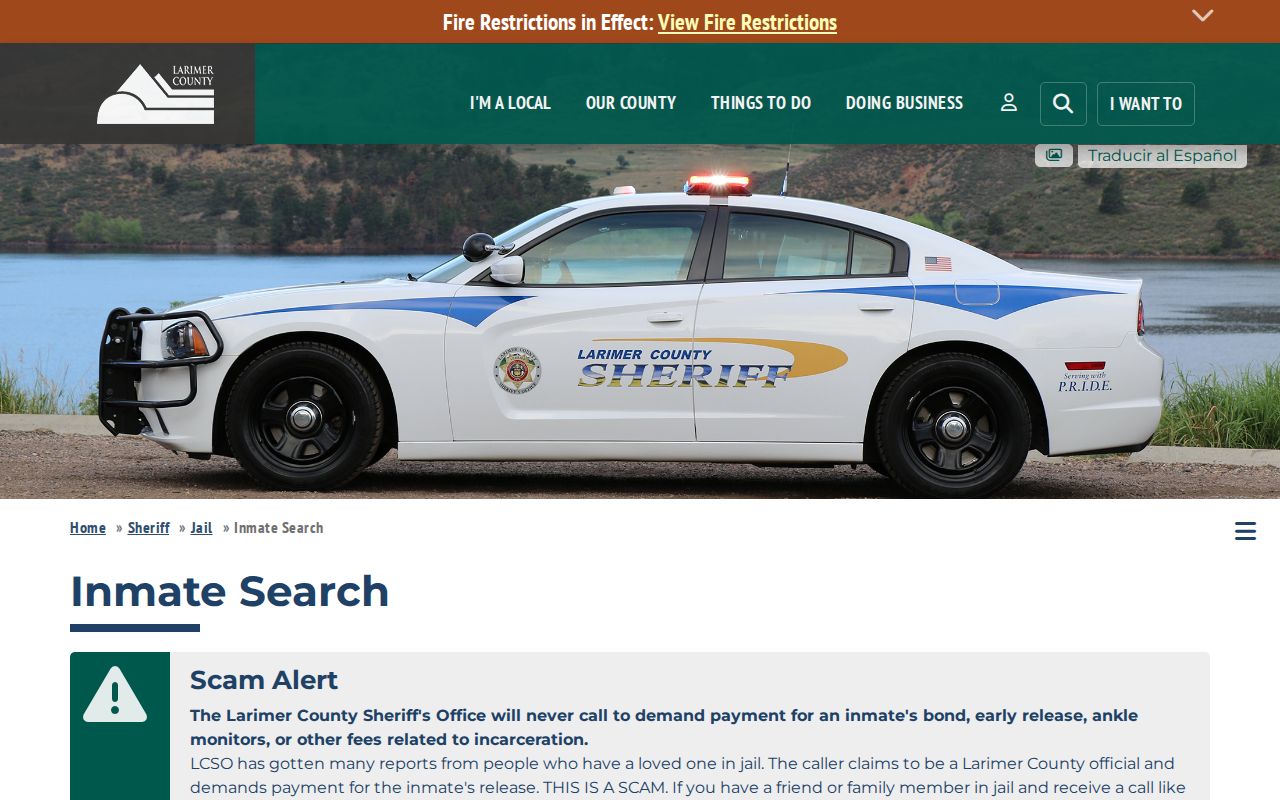
Use the Larimer County jail information to verify booking and bond. Then the issuing clerk answers for court disposition and warrant recall status.
Restricted Warrants and Larimer County Access Rules
Colorado sets the rules for court access through Chief Justice Directive 05-01, local orders, and specific statutes. The Larimer County Sheriff's criminal-justice records sit under the Colorado Criminal Justice Records Act. CORA is a separate law. Public, protected, restricted, suppressed, and sealed each carry their own meaning, so an online hearing line can be public while its affidavit stays closed.
Key rules:
Sealed records are not public, and court staff cannot verify sealed details without the required order.
Juvenile records do not follow ordinary adult criminal-access rules.
The 8th Judicial District suppresses an arrest-warrant affidavit until arrest and advisement, subject to later redaction or a judge’s order.
The Colorado Judicial public-access guide shows how these access categories and request limits apply.
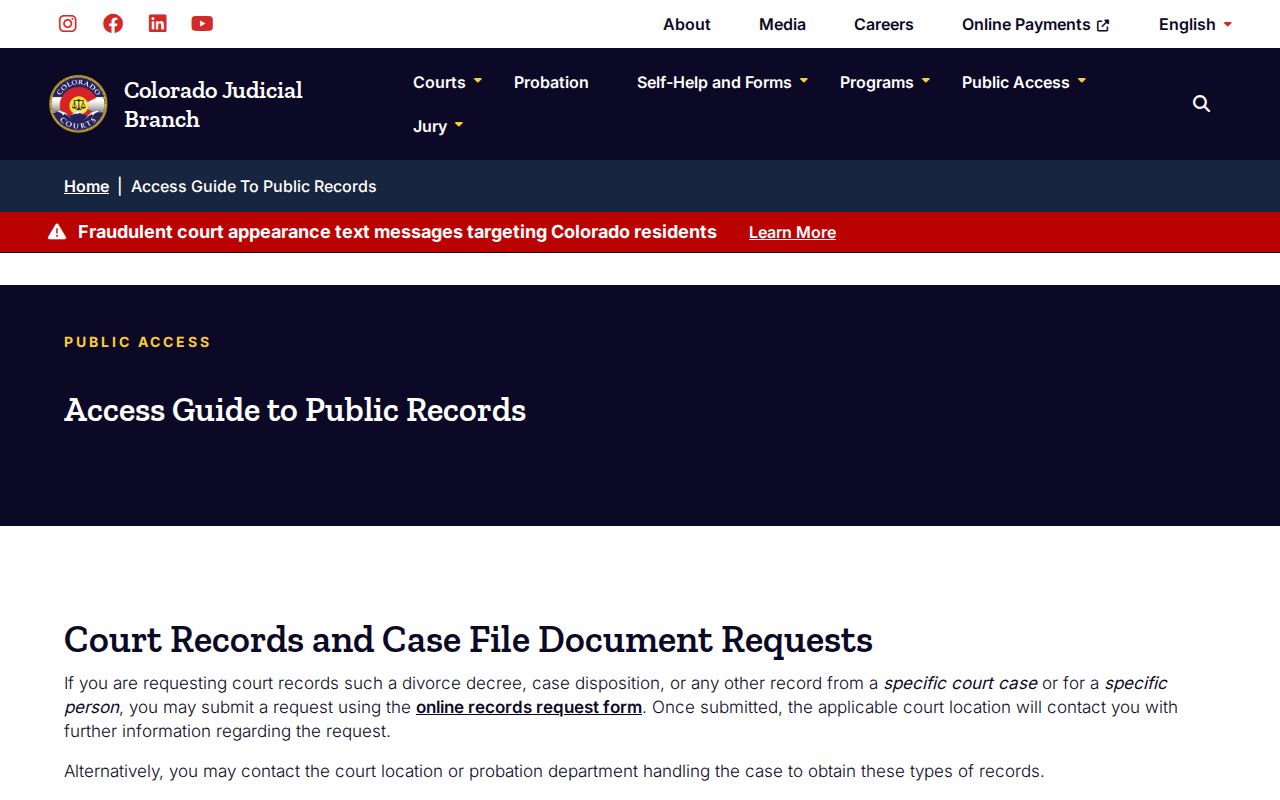
The official guidance explains why a docket clue and an available court document are not always the same thing in Larimer County.
Reading Larimer County Warrant Status Terms
Status words mark steps in a court or agency workflow, and look-alike words do not always mean the same thing. Ask the Larimer County clerk which word controls the case. Do that before you schedule an appearance or pay money.
- Active or outstanding
- The system still treats the process as unresolved; current status needs confirmation.
- Arrested
- A person was taken into custody. This does not by itself show that the court recalled or disposed of the warrant.
- Recall or quash
- A judge withdraws or sets aside the warrant. Filing a motion is not the same as approval.
- Capias
- A court term directing that a person be brought before the court; Larimer public pages more often use bench warrant.
- Disposition
- The court outcome, which must come from the clerk rather than LCSO Records.
To separate current list entries from actual court status, the Larimer County outstanding warrants page lays out the limits of the sheriff's curated list.