
Larimer County Arrest Warrants Explained
A Larimer County arrest warrant starts with a sworn affidavit. Under C.R.S. 16-3-108, the facts in that affidavit must establish probable cause that an offense occurred and that the named person committed it. Once a judge signs, the warrant directs a peace officer to bring that person before a judicial officer without unnecessary delay. The division of labor matters here. The judge issues the warrant, law enforcement serves it, and only the court decides how the case ends. Advisement, bond, charging decisions, hearings, and disposition are all separate stages down the road. Any public record you find should be read as a snapshot of process, with its date and status checked against the issuing court. Where you confirm a Larimer County warrant depends on the charge. District Court handles felonies and serious state matters. County Court takes misdemeanors, traffic, and infractions. Municipal courts keep city-code files, and the Sheriff’s warrant line can route a county inquiry, though the clerk still controls the judicial record and a city judge controls municipal process.
Larimer County Arrest Warrant Affidavits
An affidavit is the sworn statement behind probable cause. You may spot a docket event while the document stays sealed. In Larimer County, Administrative Order 2019-10 of the Colorado 8th Judicial District suppresses the arrest-warrant affidavit until the defendant is arrested and advised. After that, access opens. Redactions still apply unless a judge orders otherwise.
- Probable cause
- The legal basis the judge evaluates from sworn facts before issuing an arrest warrant.
- Suppressed
- Temporarily unavailable under an access rule or order; it does not mean the matter never existed.
- Advisement
- The post-arrest court stage after which the local order generally permits affidavit access, subject to limits.
- Redaction
- Removal of protected information before a record is released.
Inside a Larimer County Arrest Warrant
Court records and jail records pull back different curtains. In Larimer County, the arrest-warrant document and its affidavit live in the court file, while booking and bond fields come from the jail. Ask which office supplied a field that looks unclear.
| Warrant or docket number | The court or agency reference, shown in formats specific to that system |
|---|---|
| Named person | Identity information used by officials; public access may redact sensitive identifiers |
| Alleged offense | The charge or reason supporting issuance, not a conviction |
| Issuing court | District, county, municipal, or federal court with authority over the process |
| Agency | Holding or arresting agency and its case number when exposed |
| Bond | Type and amount, or no-bond notation, subject to confirmation |
| Status and dates | Issue, arrest, advisement, hearing, release, return, recall, or disposition stages |
Larimer County Arrest Warrant Access
A public docket can list "Appearance on Arrest Warrant" while the affidavit stays sealed. Advisement changes that. After arrest and advisement, use the Colorado Judicial record and document form. The Larimer clerk also takes requests at 970-494-3500 and 08RecordRequest@judicial.state.co.us. List the case number, case type, filing year, party details, and the document sought. Expect redactions. Chief Justice Directive 05-01, the local order, and other applicable law govern access. Victim, witness, juvenile, confidential-informant, personal-identifier, and ongoing-investigation material can be withheld. A partial release is not proof that omitted facts do not exist. Sheriff-held reports, booking material, and arrest summaries go through the LCSO records-request process under the Colorado Criminal Justice Records Act. LCSO screens each request. It may redact or deny material, and it keeps no court dispositions. For the disposition, ask the Larimer County clerk rather than treating an arrest record as the outcome.
Serving Arrest Warrants in Larimer County
The Larimer County Sheriff's Office serves county process as part of its officer-of-the-court duties. The official warrant-information line is 970-498-5100, option 5. Municipal police handle city process. Other agencies keep their own warrants. Federal process stays with federal courts and law enforcement, so an LCSO answer is not a national register. After a Larimer arrest, the Detention Center at 2405 Midpoint Drive handles booking and release. The jail phone is 970-498-5200. Bonds post there 24 hours. Property bonds go through the Justice Center instead and use land collateral.
Larimer County Arrest Warrant Custody Fields
The official LCSO inmate search shows name, date of birth, jail and inmate identifiers, arrest time, agency, and agency case number. It also lists charge description and authority, warrant or docket number, bond type and amount, resolved state, additional charges, and upcoming court dates. It helps after booking. It is not a warrant search. People outside Larimer County custody must look to the courts and the sheriff instead. The LCSO bond page lays out the cash, card, surety, and property-bond channels.
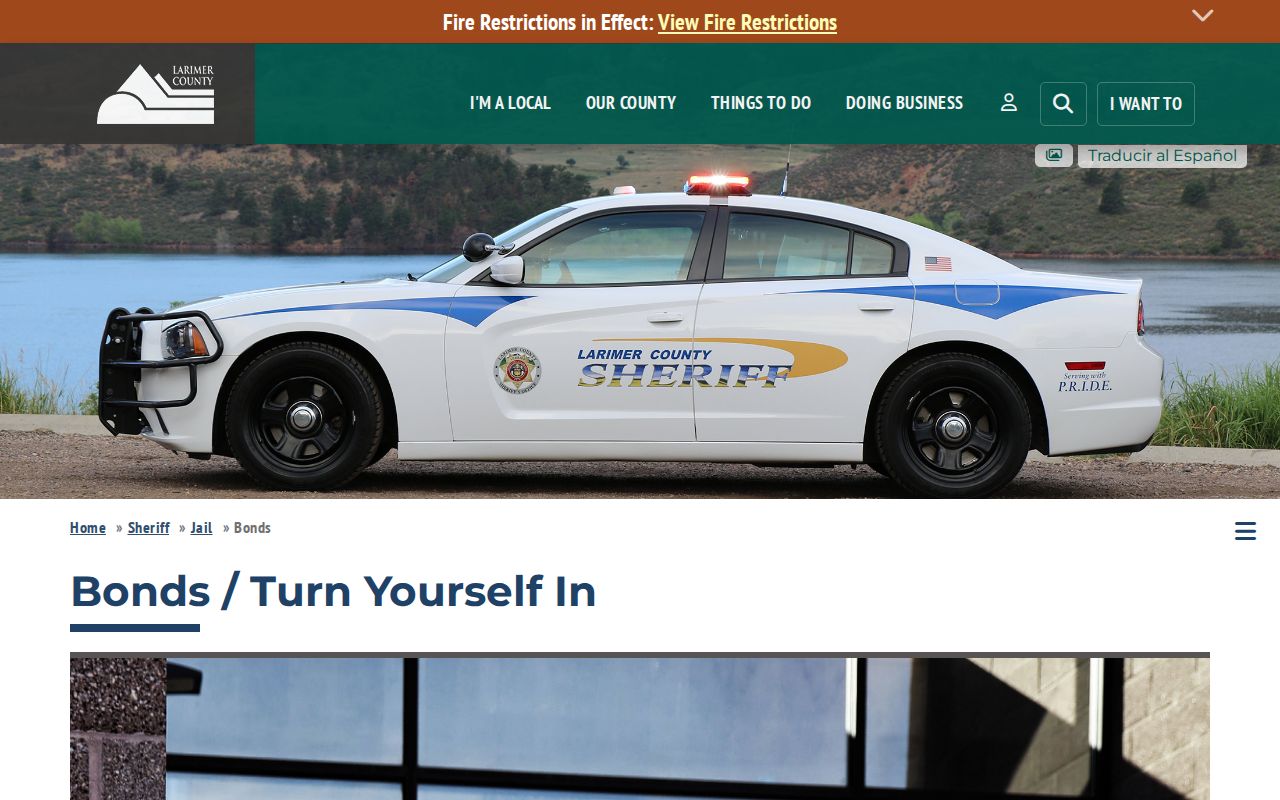
Bond payment follows official custody rules in Larimer County. Confirm the current amount and conditions before you send funds or travel.
Comparing Arrest, Summons, and Bench Warrants
Each label starts from a different court action. In Larimer County, a missed citation does not automatically mean an arrest warrant, so match your response to the paper.
| Process | Basis | Immediate effect | Best confirmation |
|---|---|---|---|
| Arrest warrant | Sworn probable-cause facts | Authorizes custody | Issuing court and LCSO option 5 |
| Summons | Order to appear | Sets a required court response | Court named on summons |
| Bench warrant | Commonly FTA or noncompliance | Authorizes arrest and return to court | Issuing judge and clerk |
| Capias | Court-specific command to bring a person in | Depends on the exact case order | Issuing court file |
Larimer County Records After Booking
The hours after service in Larimer County show which office holds each record. LCSO creates the booking and custody material. The court runs advisement and keeps the judicial file. Bond may be set or confirmed, release may follow, and the next hearing lands on the court schedule; the clerk, not LCSO Records, supplies the disposition.
- Arresting officers execute the warrant and identify the holding authority.
- The jail creates booking, charge, warrant or docket, and bond fields.
- The person appears for advisement before the proper judicial officer.
- The affidavit may become publicly accessible under Order 2019-10, subject to redaction.
- The court sets later hearings and eventually records the disposition.
LCSO policy sets a six-hour release target after bond, absent extenuating circumstances. No one should treat it as a guarantee. Before posting, confirm the accepted method, the depositor name, any paperwork deadline, and phone screening with the Larimer County jail. Cash, surety, card, and property channels each carry distinct rules. A bond secures release and future appearances. It does not end the case.
When a Larimer County Matter Is Federal
A federal arrest warrant never turns into a Larimer County record just because the arrest happens here. Federal process belongs to the U.S. District Court for the District of Colorado and its agencies. PACER offers federal docket access under its own rules. The U.S. Marshals Service holds back details on active fugitive matters. The District of Colorado PACER page sets out that federal records route and its requirements. Nothing about it runs through county channels.
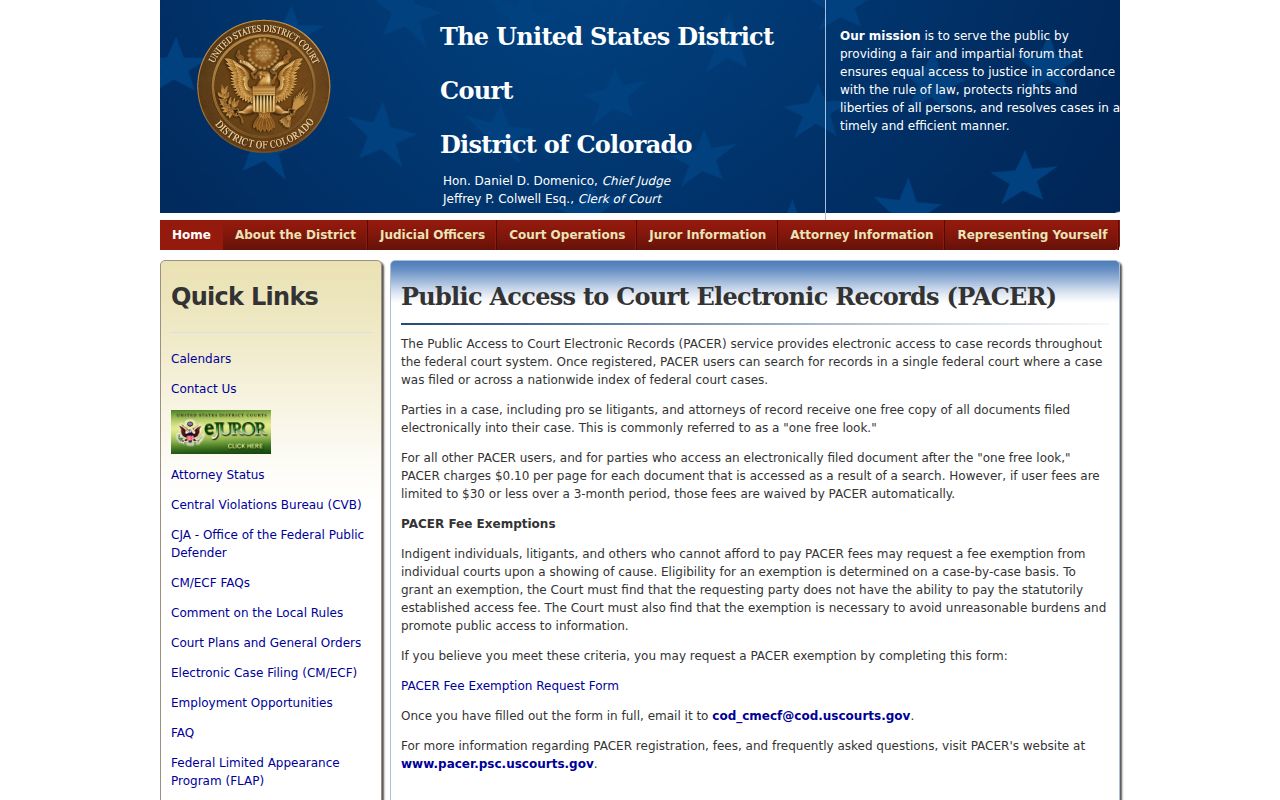
Because that track sits outside local hands, a Larimer County phone call or court search can never stand in for a full federal check.
If There's an Arrest Warrant for You
Talk to a lawyer first. Then verify the warrant itself through LCSO option 5 and the clerk of the issuing court. Ask for the case number, the exact process type, the bond amount, any required appearance, and how to surrender. If the Larimer County court wants a turn-in, bring government ID, medication in its original bottle, glasses or contacts, and little else. The jail bans many outside items. When bond is possible, pay only through the official jail or court channel.
Important: Do not rely on a caller demanding urgent payment. LCSO says it never calls to demand bond, early-release, or ankle-monitor money.
Demand for gift cards or cryptocurrency is a scam warning sign. A motion, a bond, or release from custody does not by itself confirm judicial recall. Get written confirmation from the issuing court. The Larimer County warrant records overview lays out the wider official resolution route.